

Tyrannostorus
Theropod Claw
Theropod Claw
Couldn't load pickup availability
Theropod Foot Claw Fossil from the Elrhaz Formation
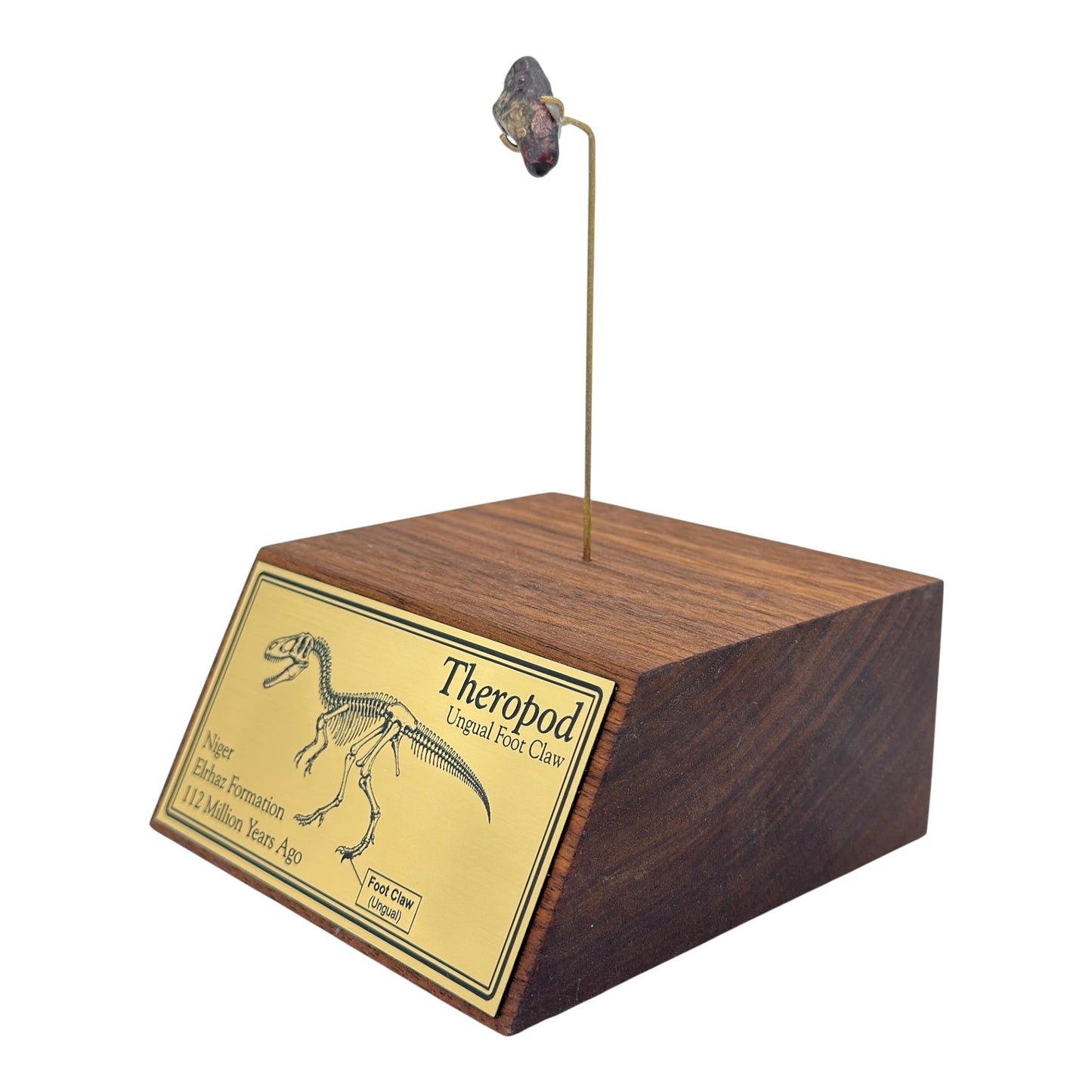
Own a genuine piece of prehistoric history with this authentic Theropod ungual foot claw fossil from the Elrhaz Formation of Niger. Dating to the Early Cretaceous Period approximately 112 million years ago, this distinctive specimen represents a fossilized claw from the foot of a theropod dinosaur.
This exceptional specimen is presented on the custom-built display stand pictured, featuring a 4 × 4 × 2-inch wooden base. With the claw mounted on the stand, the complete display measures approximately 5.75 inches tall, creating an attractive, museum-style presentation ready for display.
The fossilized claw measures approximately 0.75 inches long and preserves the characteristic curved form of a theropod ungual. Unguals are the terminal bones of the digits that supported the keratinous claws in life. While the exact species represented by this specimen cannot be reliably determined, its theropod identification and anatomical form make it a fascinating example of predatory dinosaur anatomy.
The specimen presents beautifully on its custom display and offers an opportunity to own an authentic dinosaur fossil from one of Africa's important Early Cretaceous fossil-bearing formations. Its compact size, recognizable anatomy, and distinctive provenance make it an excellent addition to a dinosaur fossil collection, educational collection, museum display, or natural history collection.
A detailed provenance portfolio and Certificate of Authenticity will accompany this specimen, providing documentation regarding the fossil's identification, geologic formation, age, and available provenance information.
Specimen Details:
Identification: Theropod dinosaur
Specimen: Pedal ungual (foot claw)
Formation: Elrhaz Formation
Location: Niger
Age: Early Cretaceous, approximately 112 million years old
Claw Size: Approximately 0.75 inches long
Display Height: Approximately 5.75 inches tall with stand
Display Stand: Custom-built stand with 4 × 4 × 2-inch wooden base
Provenance Portfolio Included: Yes
Certificate of Authenticity Included: Yes
Authenticity: Guaranteed
This is a genuine fossil. Pictures are of the actual specimen and custom display stand you will receive.
About Theropod Dinosaurs
Theropods were a diverse group of primarily bipedal dinosaurs that included some of the most recognizable predators in prehistoric history. They ranged tremendously in size and inhabited ecosystems around the world for more than 150 million years.
One of the defining characteristics of theropods was their specialized limbs and claw-bearing digits. The terminal bones of these digits, known as unguals, supported keratinous claw sheaths in life that extended beyond the fossilized bone itself. Depending on the animal, these claws could have served a variety of functions associated with locomotion, prey interaction, defense, or other behaviors.
Because isolated theropod fossils are not always diagnostic to genus or species, specimens such as this are most appropriately identified based on the anatomical characteristics that can be reliably observed.
About the Elrhaz Formation
The Elrhaz Formation of Niger is an important Early Cretaceous fossil-bearing formation dating to approximately 112 million years ago. It is particularly well known for preserving a diverse assemblage of dinosaurs and other vertebrates that inhabited northern Africa during the Cretaceous Period.
The formation has produced fossils representing several notable dinosaurs, including the large theropod Suchomimus, the unusual theropod Eocarcharia, and herbivorous dinosaurs such as Ouranosaurus and Lurdusaurus, along with crocodilians, turtles, fish, and other prehistoric animals.
Fossils from the Elrhaz Formation provide an extraordinary glimpse into the ecosystems of Early Cretaceous Africa and the diverse animals that inhabited the region more than 100 million years ago.
Share